If you have been sued or received an ADA demand letter, call an ADA defense attorney first to protect your deadline to respond, then book a CASp inspection right away, before you fix anything. The attorney handles the court case. The CASp inspector documents what is really on site, finds every barrier the plaintiff could add later, and gives you the report that California law uses to lower damages and stop the next lawsuit [Civ. Code §55.54, §55.56]. You need both, and the order matters. This guide explains what each one does, what to do in the first 30 days, and how to pick the right ADA lawyer.
We are a CASp inspection company, not a law firm, so nothing here is legal advice. What we can tell you is what we see every week: owners who call an inspector after the repairs are done (and lose the proof of what was there), and owners who settle one case only to get sued again over the next barrier on the same property. Calling the right people in the right order prevents both.
ADA defense attorney vs CASp inspector at a glance
| Task | ADA defense attorney | CASp inspector |
|---|---|---|
| Answer the complaint and meet court deadlines | Yes | No |
| Negotiate or settle with the plaintiff’s lawyer | Yes | No |
| Ask the court for a stay and early evaluation conference (California) | Yes | Provides the CASp report the request relies on |
| Measure every parking space, ramp, door and restroom | No | Yes |
| Tell you which claims in the complaint are real | Legal view | Field measurements against the ADA and CBC 11B |
| Find barriers the complaint missed | No | Yes |
| Write a fix list with code sections and a schedule | No | Yes [Civ. Code §55.53] |
| Issue a Disability Access Inspection Certificate | No | Yes (California) |
| Serve as an expert witness on site conditions | No | Yes |
Who should you call first?
Call the attorney first, the same day you are served. A lawsuit comes with a hard deadline to respond. In federal court it is generally 21 days after service [FRCP 12(a)], and in California state court it is generally 30 days [Code Civ. Proc. §412.20]. Miss it and the plaintiff can ask for a default. Only a lawyer can file your response and talk to the plaintiff’s lawyer for you.
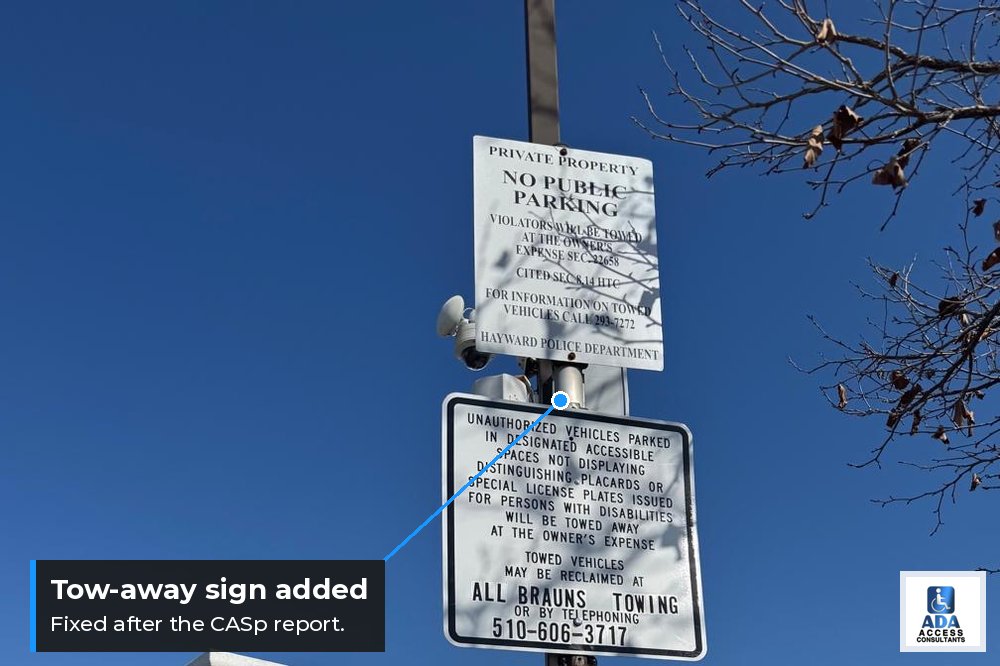
Call a CASp inspector the same week. The California advisory notice that comes with every accessibility lawsuit tells defendants to take pictures and measurements of each barrier before fixing it, in case the court needs to see the condition [Civ. Code §55.54(a)]. A CASp report does that with dated photos, measurements and code citations. It also finds everything else on the property, which matters because a plaintiff can amend the complaint to add barriers, and the next plaintiff can sue over the ones you did not fix.
If you only received a demand letter (no lawsuit yet), the order is the same. Talk to an attorney before you answer the letter, and get the property inspected while you still have time to correct things before a complaint is filed.
What an ADA defense attorney does
An ADA defense attorney (you will also see “ADA lawyer” or “ADA lawsuit defense attorney”) represents the business owner, landlord or tenant who was sued. In a typical case the attorney will:
- Check that the complaint or demand letter follows the rules. In California a demand letter has to describe each barrier, how it affected the plaintiff and the date of each visit, and it cannot ask for money [Civ. Code §55.31]. The plaintiff’s attorney must include their State Bar number and send a copy to the California Commission on Disability Access [Civ. Code §55.32].
- Check whether the plaintiff is a “high-frequency litigant” (10 or more accessibility complaints in the past 12 months). Those plaintiffs pay an extra $1,000 filing fee in state court and face extra pleading rules, and the defendant may be able to ask for a stay and early evaluation conference [Code Civ. Proc. §425.55; Gov. Code §70616.5].
- File for a court stay and early evaluation conference when you qualify, which pauses the case for 90 days and puts both sides in front of the court early [Civ. Code §55.54].
- Decide with you whether to fight, fix and settle, or ask the court to dismiss, and handle the plaintiff’s demand for attorney’s fees.
- Decide whether to tender the claim to your insurer or your landlord or tenant under the lease.
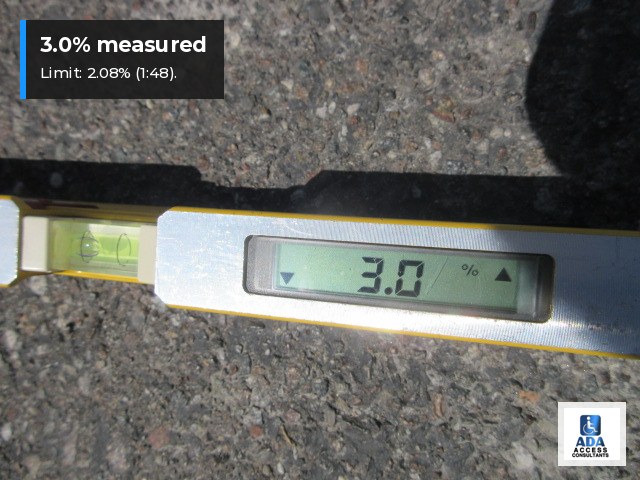
What an attorney can’t do is tell you whether your accessible parking space is 2.5% or 1.9% slope. That takes a level, a tape and someone certified to read the code, which is where the inspector comes in.
What a CASp inspector does in an ADA lawsuit
A Certified Access Specialist (CASp) is an inspector certified by the State of California to inspect sites for compliance with state and federal accessibility standards. When you are sued, the CASp inspection does four jobs:
- Documents the site before repairs. Dated photos and measurements of every claimed barrier, so your attorney can show the court what was really there.
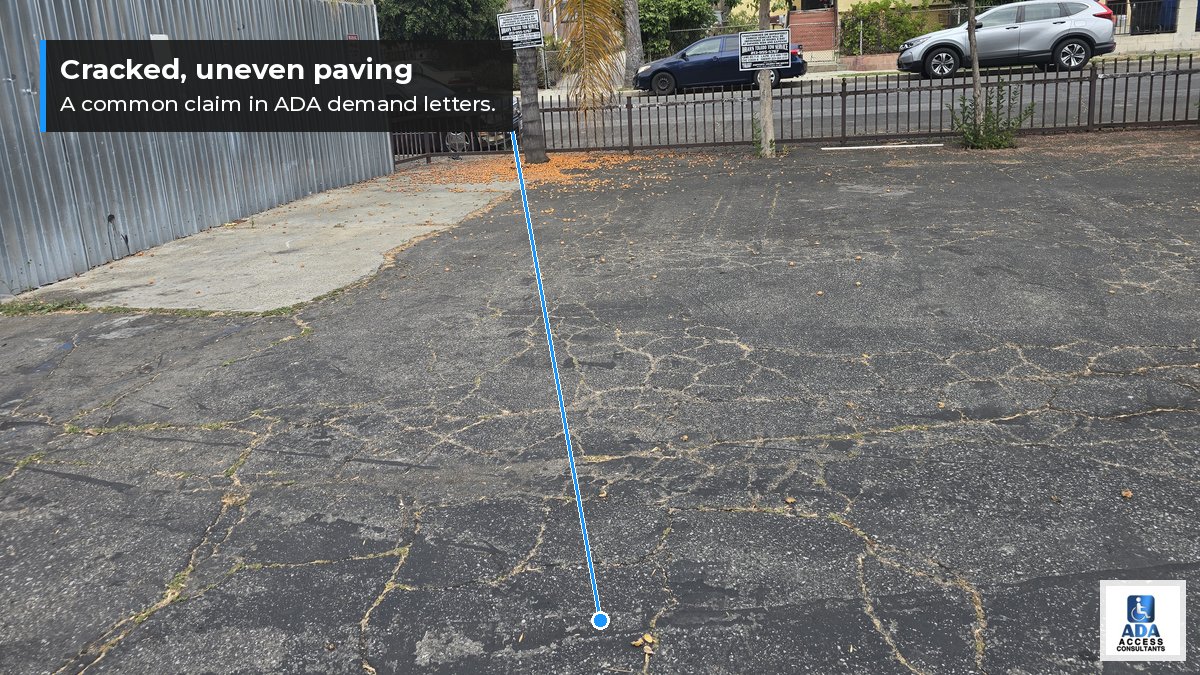
- Tests the complaint. Many complaints are written from a template. The report shows which claims hold up (for example, a parking aisle that really is over 2.08% slope) and which don’t.
- Finds what the complaint missed. We inspect the whole path a customer uses, from parking to the restroom, so you can fix everything at once instead of waiting for the next demand letter.
- Gives you a fix list and schedule. A CASp report lists the corrections needed, the code section for each, and a schedule to complete them [Civ. Code §55.53]. Your contractor builds from it; your attorney uses it to show the court the barriers are being corrected.
After the work is done we can come back, confirm the corrections and issue the Disability Access Inspection Certificate. If the case goes further, a CASp can also serve as an ADA expert witness, attend a joint site inspection with the plaintiff’s expert, and testify to site conditions.
Why the CASp report matters so much in California
California is where ADA lawsuits cost the most, because state law adds money damages on top of the federal ADA. Under the federal ADA, a private plaintiff can get an order to fix the barriers plus attorney’s fees, but not damages [42 U.S.C. §12188(a), §12205]. California’s Unruh Civil Rights Act makes every ADA violation a state law violation too, with minimum damages of $4,000 per offense plus attorney’s fees [Civ. Code §51(f), §52(a)].
California’s CASp program, created by SB 1608 (2008) and strengthened by SB 1186 (2012) and SB 269 (2016), ties lower damages to inspections and fast repairs:
| Your situation | What the law allows |
|---|---|
| Site was CASp inspected before the claim, and you fix all claimed violations within 60 days of service | Minimum damages drop from $4,000 to $1,000 per offense, plus a 90-day stay and early evaluation conference as a “qualified defendant” [Civ. Code §55.52(a)(8), §55.54, §55.56(g)(1)] |
| Small business (25 or fewer employees and under the gross receipts limit) that fixes all claimed violations within 30 days of service | Minimum damages drop to $2,000 per offense; may also request the stay and early evaluation conference [Civ. Code §55.54, §55.56(g)(2)] |
| Small business that fixes certain technical items (some signs, striping color, faded paint, detectable warnings on some ramps) within 15 days | Those items are presumed not to cause the difficulty needed for minimum damages [Civ. Code §55.56(e)] |
| Business with 50 or fewer employees that had a CASp inspection before the claim and fixes the noted violations within 120 days | No minimum statutory damages for violations during that 120-day window [Civ. Code §55.56(g)(3)] |
Two things stand out. First, damages are counted per visit (“particular occasion”), not per violation [Civ. Code §55.56(f)]. Second, the best protections require an inspection before the claim. A CASp inspection done after you are sued still documents the site and builds your fix list, and it makes you a qualified defendant for the next claim. That is the real cost saver, because properties that get one lawsuit often get another. See benefits of a CASp inspection for the full list.
Your first 30 days after an ADA lawsuit or demand letter
- Day 1: write down the service date and send the complaint or letter to an ADA defense attorney. Don’t call the plaintiff or their lawyer yourself.
- Day 1–3: notify your insurer and your landlord or tenant. Many commercial leases assign accessibility repairs to one party. In California, leases signed since 2017 must say whether the space was CASp inspected [Civ. Code §1938].
- Week 1: book a CASp inspection. Don’t start repairs until the barriers are photographed and measured.
- Week 2–3: review the report with your attorney. Sort findings into the claimed items, other barriers, and items to dispute.
- By day 30 (small businesses) or day 60 (qualified defendants): finish the corrections on the claimed items, keep receipts and after photos, and let your attorney decide how to present them.
- After the case: fix the rest of the list. Then get the site re-inspected and post the certificate.
How to choose an ADA attorney
Searches for “ADA attorney” and “ADA lawyer” return both plaintiff and defense firms, so check which side a firm works for. For a business defending a claim, look for:
- Experience with construction-related accessibility claims, not just general business law. Ask how many ADA cases they handled last year.
- Knowledge of your court. In California, many cases are filed in federal court with the state Unruh claim attached, and others go to state court where the CASp stay and early evaluation conference apply.
- A plan that includes an inspection. Good defense attorneys want the site measured early. If they never ask what is on site, ask why.
- A clear fee arrangement (flat fee, hourly, or capped) and an honest view of what settling versus fighting will cost.
- Website claims too. If the lawsuit is about your website, you need an attorney who handles digital accessibility; see our ADA compliant website guide.
We work alongside defense attorneys on cases across California and can point you to firms our clients have used. Call us and we will tell you who we have seen do this work well.
How to avoid the next ADA lawsuit
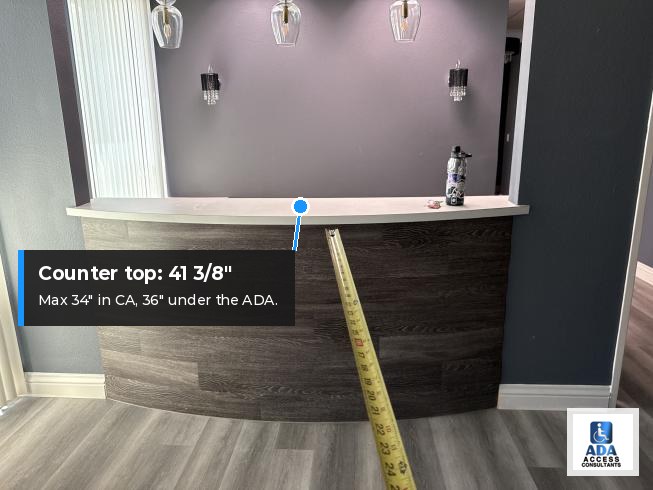
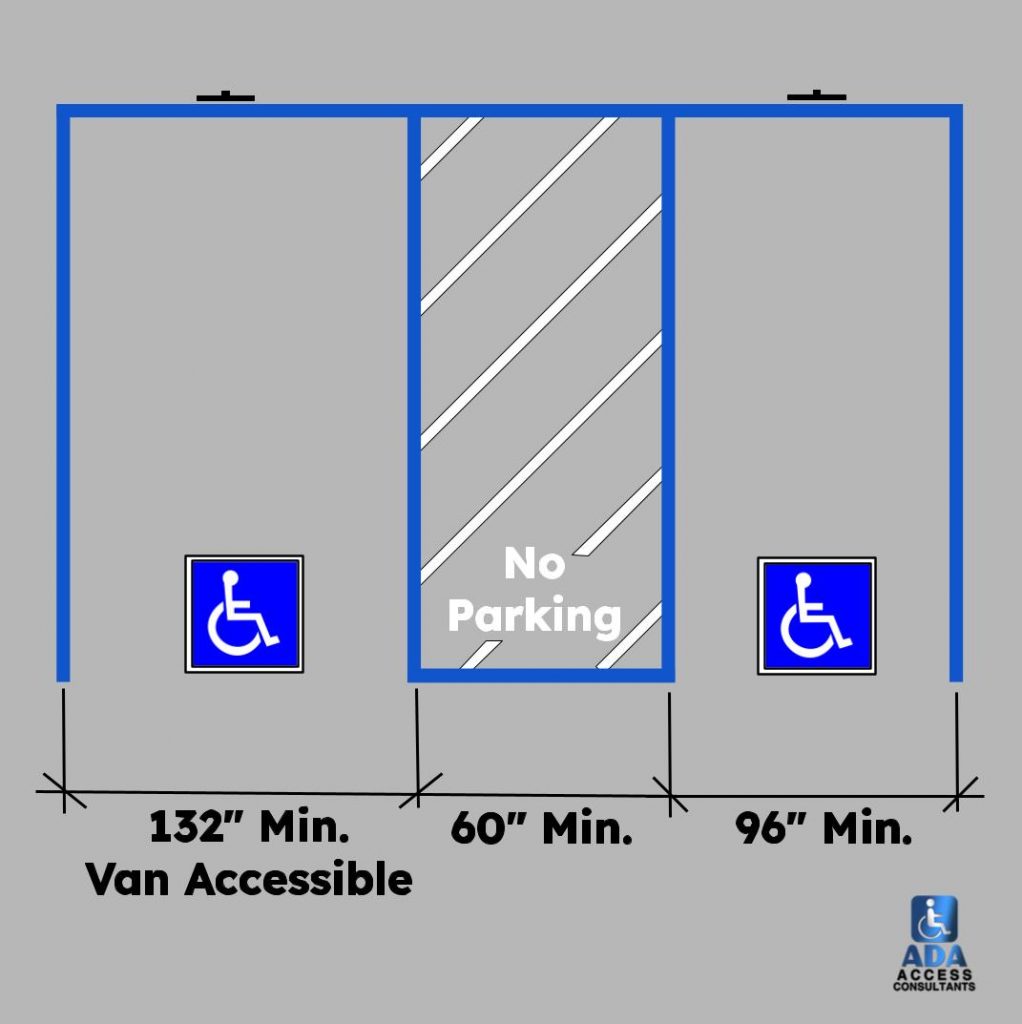
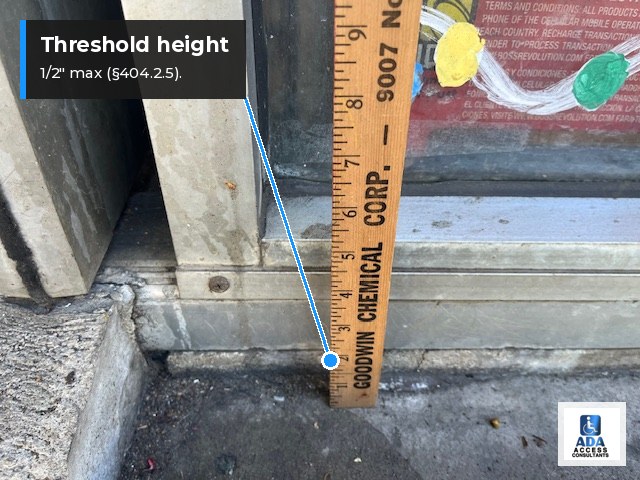
Most of the barriers in the cases we see are basic: parking slope and signs, the route to the entrance, door hardware and opening force, threshold height, counter height and restroom clearances. An ADA inspection finds them before a plaintiff does. Start with our ADA compliance checklist and the top 10 ADA violations, then have a CASp inspect the site so the protections above apply before a claim, not after. Existing buildings only have to remove barriers when it is readily achievable, and the report helps you plan that work over time.
If you already have a lawsuit, read our step-by-step guide for business owners who received an ADA lawsuit, and see qualified defendant and demand letter in our ADA definitions.