ADA Door Width Requirements: Minimum Widths & Clearances
ADA Clear Door Width Requirements
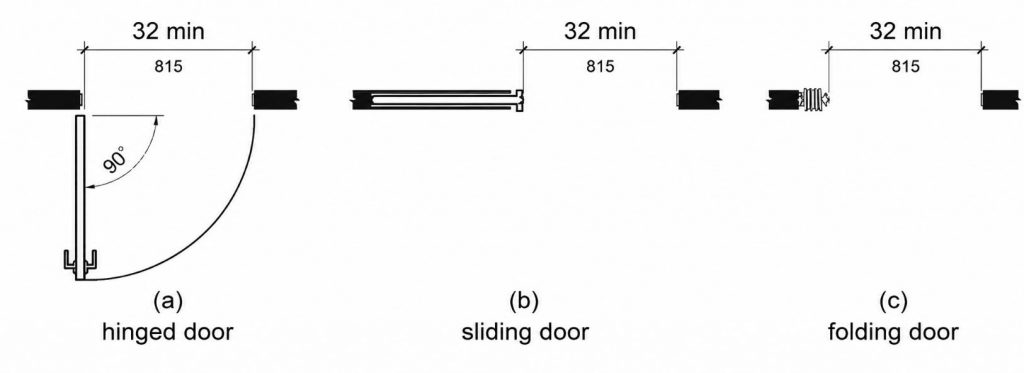
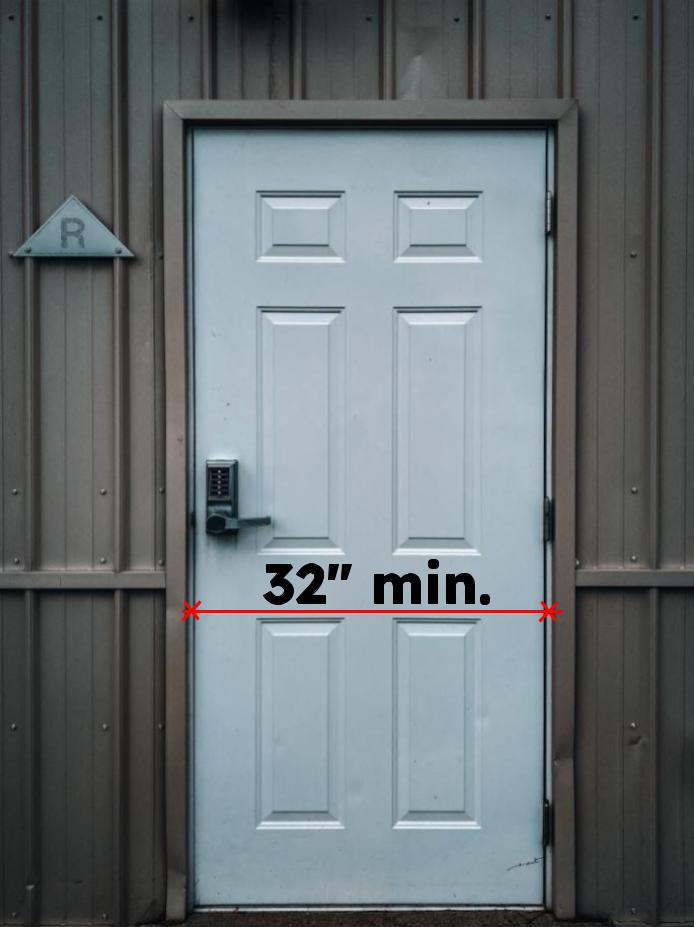
Openings to doors must provide a clear width of 32” inches (815mm) minimum [§404.2.3]. Our inspectors measure clear openings of doors from the face of the door to the door stop while the door is open 90° degrees. ADA requirements can be complex so make sure to visit our complete ADA door guide.
Door Width for Openings Deeper than 24”
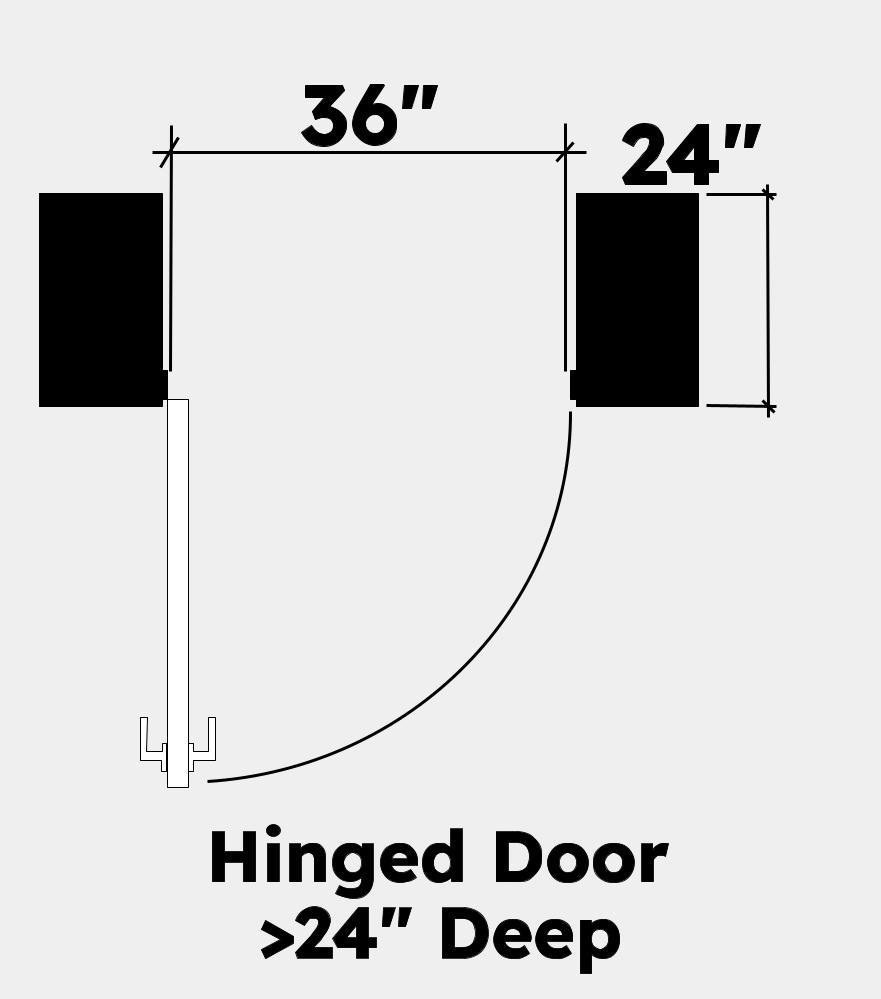
When a door opening depth is 24” inches or deeper, the clear door width must be raised to 36” inches minimum [§404.2.3]. This additional spacing accounts for the loss of clearance after entering a doorway. ADA door width requirements make navigating a property easier and will help provide accessibility to most people.
Who is Responsible for ADA Door Width?
Property managers, building owners, real estate investment firms, public entities, and more are subject to the Americans with Disabilities Act (ADA) door width requirements. These standards were set in place to provide access to all types of properties for the most amount of people possible. If you have an interest in a property, it may be your responsibility to explore ADA accessibility not only for your customers but also your business.
ADA Door Projections
ADA code prohibits projections more than 4” inches in open door width between 34” inches and 80” inches above the finish floor. These projections can obstruct the entrance to a door, and are a threat to a door’s accessibility. If you need help navigating ADA door width, we recommend working with a professional ADA inspection company and contractor to make the necessary changes.
The ADA Covers Different Types of Doorways
Hinged Door Width
Hinged doors are covered under standard ADA door width standards. This include spring hinges in addition to normal hinges.
Sliding Door Width
Sliding doors are required to be ADA compliant. This can be sliding glass doors, pocket doors, or other types of entrances with doors resting on tracks. Additionally, thresholds need to be considered.
Folding Door Width
Folding style doors like accordion doors, are required to be ADA compliant. Following the ADA can be the difference between providing someone access to your property or a legal consequence.
Why are ADA Door Width Requirements Important?
ADA door width is important because a door is the first step to entering your business. The U.S. Census Bureau estimates 1 in every 7 Americans live with a physical disability. A large part of a businesses traffic is from the disabled population and it’s ethically important to provide access to everybody. In addition to doing the right thing, there are legal consequences to not being ADA accessible.
Legal Risks of a Non-Compliant ADA Door Width
Lawsuits surrounding ADA door width requirements have exploded and business owners across the US are focusing on ADA compliance to avoid lawsuits. If you want to avoid liability while creating an inclusive environment at the same time, reach out for a free ADA evaluation estimate and find out how you can work towards accessibility.
Common Questions
ADA Door Width FAQ
Who enforces ADA door width requirements?
Because the Americans with Disabilities Act (ADA) is federal law, the department of justice is technically responsible for enforcing ADA door code.
How wide does my door have to be?
The ADA requires a minimum of 32” inches in width in most scenarios.
Does the ADA apply to all types of doors?
The ADA door width code includes standards for sliding doors, gates, interior doors, and more with exceptions.
How do I make my doors ADA compliant?
Reach out for a free estimate on an ADA evaluation and report. We’ll show you what’s wrong with your doors and how to fix them!