ADA Soap Dispenser Requirements: Height, Clearance & More
The ADA requires a soap dispenser’s operable part to be no higher than 48” inches or 44” inches when obstructed. These height requirements allow for the best use of soap and hand sanitizer dispensers. Additionally, the lowest the operable part may be mounted is 15” inches above the finish floor. If your bathroom dispensers are mounted wrong, you could face complaints or even legal action. Use this guide to navigate your bathroom’s accessibility and get complaints!
Quick Answer: ADA Soap Dispenser Height at a Glance
Soap dispensers must be mounted 15″ to 48″ when unobstructed or 15″ to 44″ when obstructed. The Americans with Disabilities Act (ADA) has strict requirements for the height of soap dispensers and all other accessories in bathrooms. As an owner, property manager, or tenant its important to offer facilities that are accessible to the public. Make sure to mount soap dispensers in the correct range and ensure you position them correctly. Additionally include dispensers that follow ADA requirements.
What Are the ADA Soap Dispenser Height Requirements?
ADA soap dispenser requirements are based on ADA reach range requirements. Following these requirements can prevent lawsuits and help you create an accessible environment.
Unobstructed Reach: 48" Maximum AFF
Unobstructed reach requires the operable part to be mounted 15” inches minimum to 48” inches maximum above the finish floor. An unobstructed reach in plain terms means there is no counter or sink blocking the approach of a soap dispenser. A good example would be where a soap dispenser is mounted to the side of a counter or sink.
Obstructed Forward Reach Over a Sink: 44" Maximum
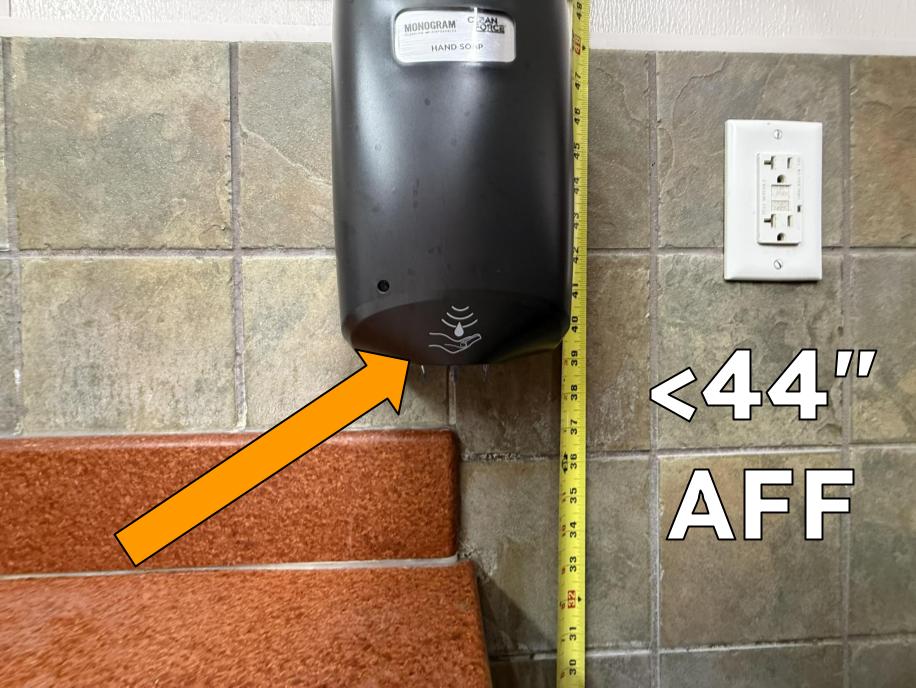
The maximum height a soap dispenser can be mounted reduces to 44” inches when the reach is obstructed. The second scenario for reach ranges apply when there is an obstructed reach. An obstructed reach range means the soap dispenser is being blocked by an obstacle. This would be in the form of a soap dispenser being mounted above the sink counter.
Prevent ADA Soap Dispenser Lawsuits
We’re seeing an increase of business owners and property managers face ADA related lawsuits for their bathroom accessories, like soap dispensers. If you want to bring your bathroom to compliance and reduce liability, we recommend an ADA evaluation and report.
Clear Floor Space & Approach Requirements
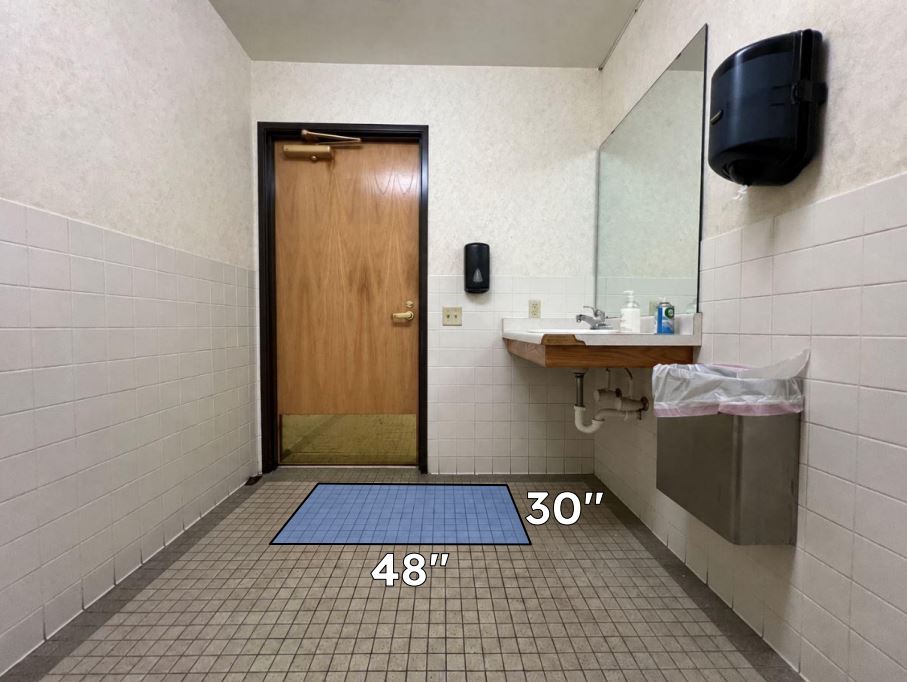
Clear floor space is also a consideration when mounting and positioning soap dispensers. To follow ADA soap dispenser requirements, make sure you give the accessory proper clear floor space.
Minimum 30" x 48" Clear Floor Space
Soap dispensers require a clear floor space of 30” inches by 48” inches minimum. The Americans with Disabilities Act (ADA) requires this floor space to ensure users with disabilities have enough clearance to comfortably operate the accessory.
Knee and Toe Clearance Under the Lavatory
In addition to clear floor space, you need the correct knee and toe clearance when a soap dispenser is mounted above a counter or lavatory. This clear floor space allows wheelchair users to wheel under the counter without difficulty to access the soap dispenser.
Operable Part Requirements: Force, Grip & Ease of Use
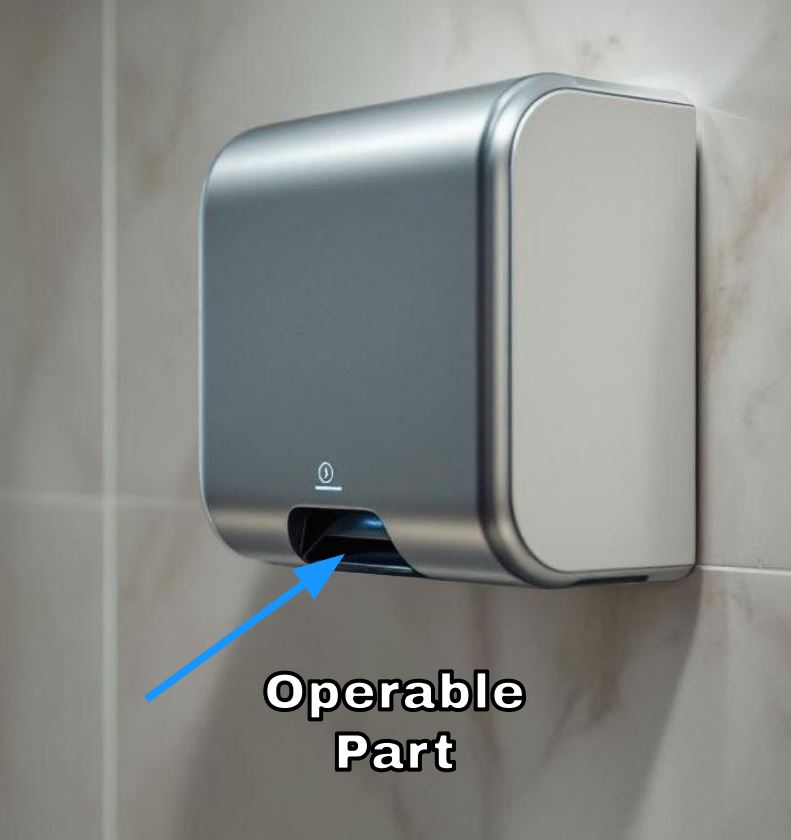
ADA soap dispenser requirements include operable parts. The operable part refers to the mechanism that dispenses the soap.
Maximum 5 Pounds of Force
When following the ADA, code requires no more than 5 pounds of force to activate the soap dispenser. This applies to call manual buttons or push levers and not automatic sensor dispensers.
No Tight Grasping, Pinching, or Twisting
In addition to the force required, you need to make sure your soap dispenser does not require any tight pinching, grasping, or twisting.
Common Soap Dispenser ADA Compliance Mistakes
Measuring the Housing Instead of the Activation Point
The most common mistake we see when inspecting soap dispensers is where the accessory is being measured to. Often, installers measure the soap dispenser to the housing of the dispenser and not the actual operable part. Make sure you measure to the operable part to avoid mounting mistakes.
Ignoring Counter or Vanity Depth
Another common mistake we witness is assuming the 48” inch height requirement is universal. There is an exception to the mounting height of soap dispensers when you have an obstructed reach range. Obstructed reach ranges require a maximum height of 44” inches.
Blocking Required Clear Floor Space
Make sure you have nothing blocking the clear floor space in front of your soap dispenser. We commonly see employees or business owners position trash cans or other elements in the way of the clear floor space. Make sure to not interfere with clear floor space to avoid potential lawsuits.
ADA Soap Dispenser Requirements Checklist
- Soap Dispenser operable part height (44″ or 48″ depending on obstruction)
- 15″ minimum height to all soap dispensers
- Clear floor space of 30″x48″ inches minimum, or 36″ inches wide if recessed
- Knee and toe clearance is not obstructed
- Soap dispensers has 5 pounds maximum operating force
- No tight grasping, pinchinch, or twisting is required
- Soap dispensers should allow for one hand operation
Common Questions
Frequently Asked Questions
What is the maximum height for an ADA-compliant soap dispenser?
The maximum height for an ADA compliant soap dispenser is 48” inches for unobstructed reaches and 44” inches for obstructed reaches.
What is the minimum height for an ADA soap dispenser?
The minimum height requirements for ADA soap dispensers is 15” inches to the operable part.
Can a soap dispenser be mounted directly above the sink?
A soap dispenser can be mounted directly above a sink so long as it complies with reach range and height requirements.
Are touchless soap dispensers exempt from ADA height rules?
Touchless soap dispensers are not exempt from ADA height rules. In the case of touchless soap dispensers, the operable part would be the point at which the sensor can activate.
How much force can it take to operate a soap dispenser under ADA?
The maximum amount of force required to operate a soap dispenser is 5 pounds.
Do ADA soap dispenser rules apply to public use or employee only restrooms?
The Americans with Disabilities Act covers public places, public funded places, and places of employment. This means soap dispenser rules do apply to both customer use and employee use bathrooms.
Get Your Restroom Accessories Evaluated for ADA Compliance
If you are facing an ADA related lawsuit or want to be proactive about your properties accessibility. We recommend an ADA evaluation and reporting so you can make the changes necessary for compliance. We are seeing an increase in complaints and inaccessible properties. It’s in your best interest as a business owner or property manager to work towards ADA property compliance. Doing so will cater to the most amount of customers possible while removing yourself from legal liabilities.