Guide to ADA Toilet Accessories
What Are ADA Toilet Accessories?
In a bathroom or toilet facility, ADA compliant toilet accessories include items such as toilet paper dispensers, toilet seat cover dispensers, paper towel dispensers, soap dispensers, automatic hand dryers, grab bars and more. As a business owner or property manager, if you understand the locations and measurements of ADA toilet accessories, you’ll ensure access for every person using your bathroom or toilet facility. Follow this guide to ensure you’re following the ADA (Americans with Disabilities Act) and avoid costly fees and lawsuits. ADA toilet accessories can be complex, hiring a certified access specialist (CASp) at ADA access consultants will get you an ADA inspection and a detailed report to reference to fix your bathroom.
Why are ADA Compliant Toilet Accessories Important?
It’s important that accessories in bathrooms such as soap dispensers are accessible for many reasons. First and most importantly, it’s the right thing to do and good business to have accessible ADA toilet accessories. In addition to that, it’s the law. The Americans with Disabilities Act (ADA) is federal legislation that applies to almost all properties that requires owners and property managers to adhere to the ADA. Another important aspect of compliant ADA toilet accessories is the legal aspect. When in violation of the ADA, you are subject to frivolous and often ill-intentioned lawsuits that are running rampant throughout the US. If you want to be a good business owner catering to their community and at the same time avoid costly legal fees and fines, it’s a good idea to understand toilet accessory requirements in this guide or hire an ADA inspector.
Basics of ADA Toilet Accessories
Understanding ADA toilet accessories consists of knowing several element positioning and location requirements. Many accessible bathroom elements share position requirements like the maximum height to the “operable part”.
Operable Parts Rule: What It Means for Accessories
An Operable part, as defined by the ADA in a physical element of accessories or hardware used to activate, adjust, or use an element. For example, the operable part of a manual paper towel dispenser would be the crank lever used to dispense paper towels. The most important detail to remember about operable parts is that they must avoid tight grasping, pinching, twisting of the wrist, or force in excess of 5 lbs.
ADA Grab Bars
ADA grab bars are the most important part of ADA toilet accessories. To make it simple, we’ll only cover toilet grab bars, but keep in mind grab bar requirements apply in other areas like showers. If you want, check out the complete guide to ADA grab bars. The rear grab bar must be a minimum width of 36” extending 12” on the closed side and 24” on the open side. Side grab bars must be a minimum width of 42”, be spaced 12” maximum from the rear wall, and must be 54” from the rear wall to the end of the grab bar.
ADA Toilet Paper Dispensers
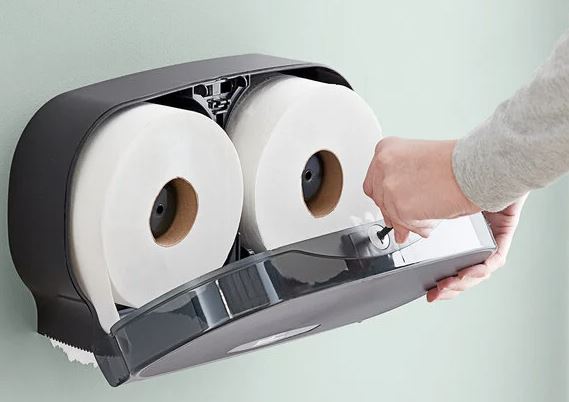
Toilet paper dispensers are the most used ADA toilet accessories, so make sure to pay attention! Using a Certified Access Specialist (CASp) for an ADA inspection paired with an experienced contractor can make all the differences in quality and accuracy of repairs.
ADA Compliant Toilet Paper Holder Location
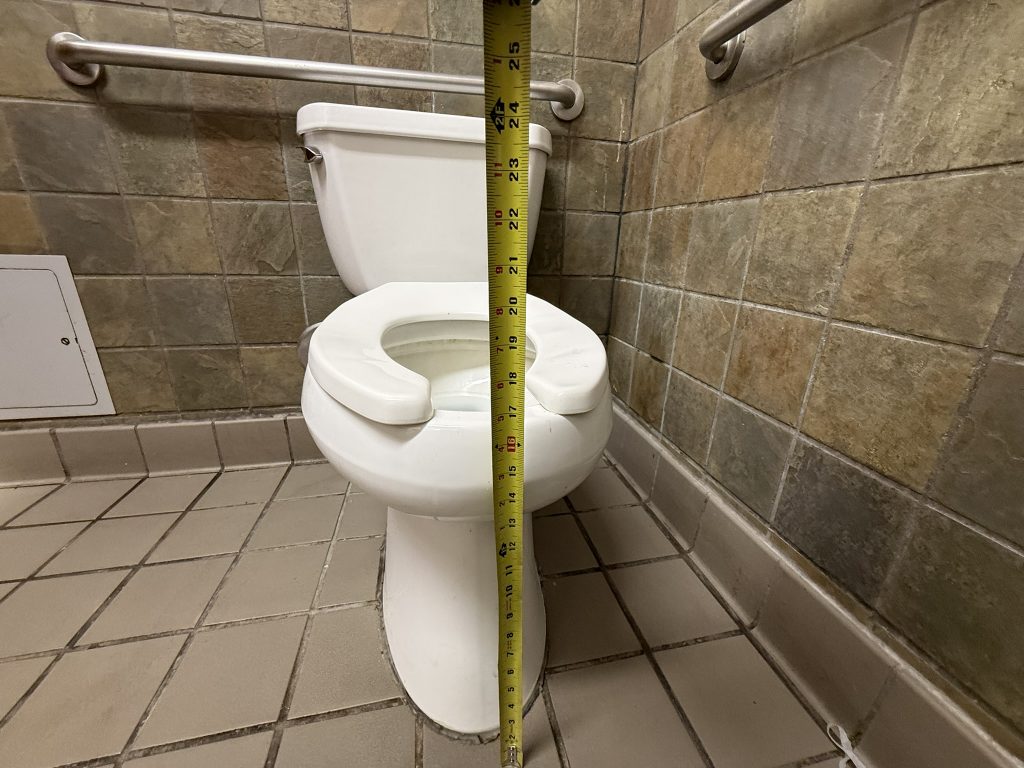
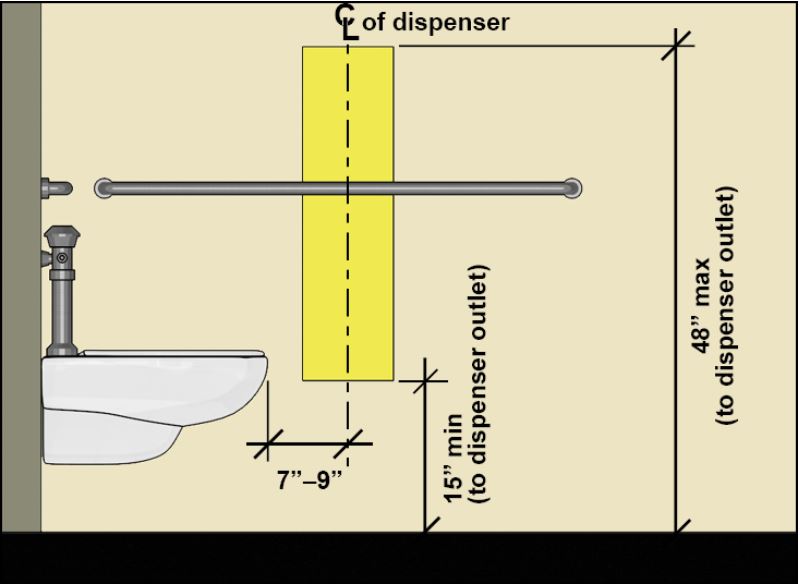
ADA compliant toilet accessories such as toilet paper holders are required to be a specific distance of 7-9 inches in front of the toilet to the centerline of the dispenser. This ensures there is enough room for a seated toilet user to comfortably reach the toilet paper dispenser.
Recessed vs Non-Recessed Toilet Paper Dispenser
In the context of ADA accessible toilet accessories, there are recessed and non-recessed toilet paper dispensers. When looking at the mounting requirements for non-recessed toilet paper dispensers, it’s important to know the dispenser opening location can not be within 12 inches vertical of side grab bar.
ADA Flush Controls and Toilet Sensors
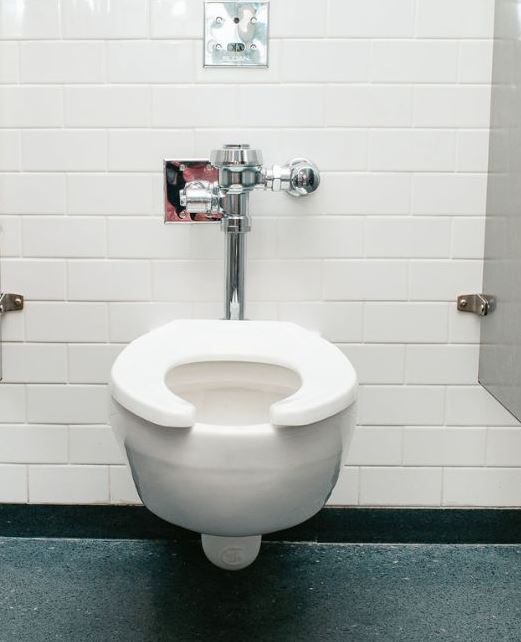
Looking at ADA toilet accessories, there are flush controls with specific requirements. Here we’ll go over the location and height requirements along with the differences in ADA toilet flush controls.
Location of Toilet Flush Controls
Location of flush controls is very important. The detail that needs to be included during installation is the side of the bathroom stall and the flush control faces. It is always best practice to orient the flush controls facing and serving the open side of the stall with the most clear floor space.
Height requirements of Flush Controls
The height of ADA flush controls have specific height requirements that are different from reach range requirements in the ADA. The ADA toilet flush control must be a maximum of 44 inches above the finish floor.
ADA Compliant Soap Dispensers
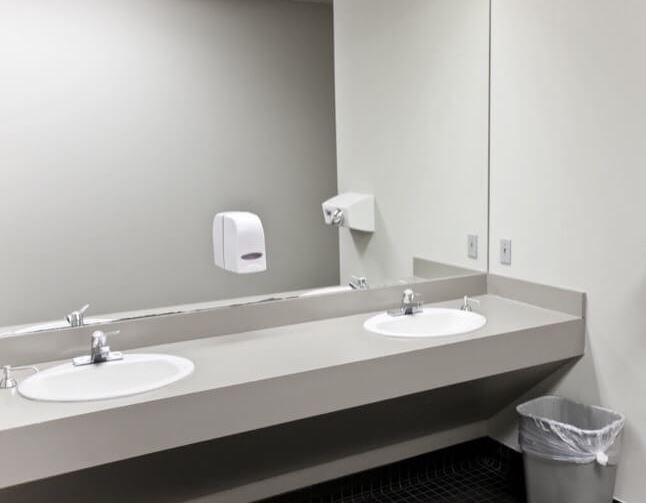
Arguably the most important ADA toilet accessories would be the dispensers. Having the soap dispenser at the proper height ensures people of all ability levels can use it.
Reach Range Requirements for Soap Dispensers
The standard reach range requirements apply for soap dispensers so placement is important. Ensure you follow ADA reach range code by not placing the dispenser too deep over the counter, making the reach difficult.
Height of ADA Soap Dispenser
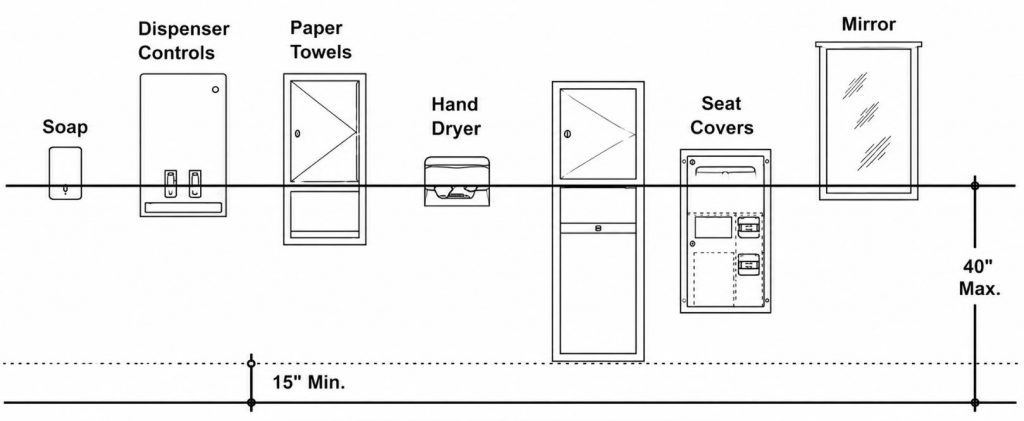
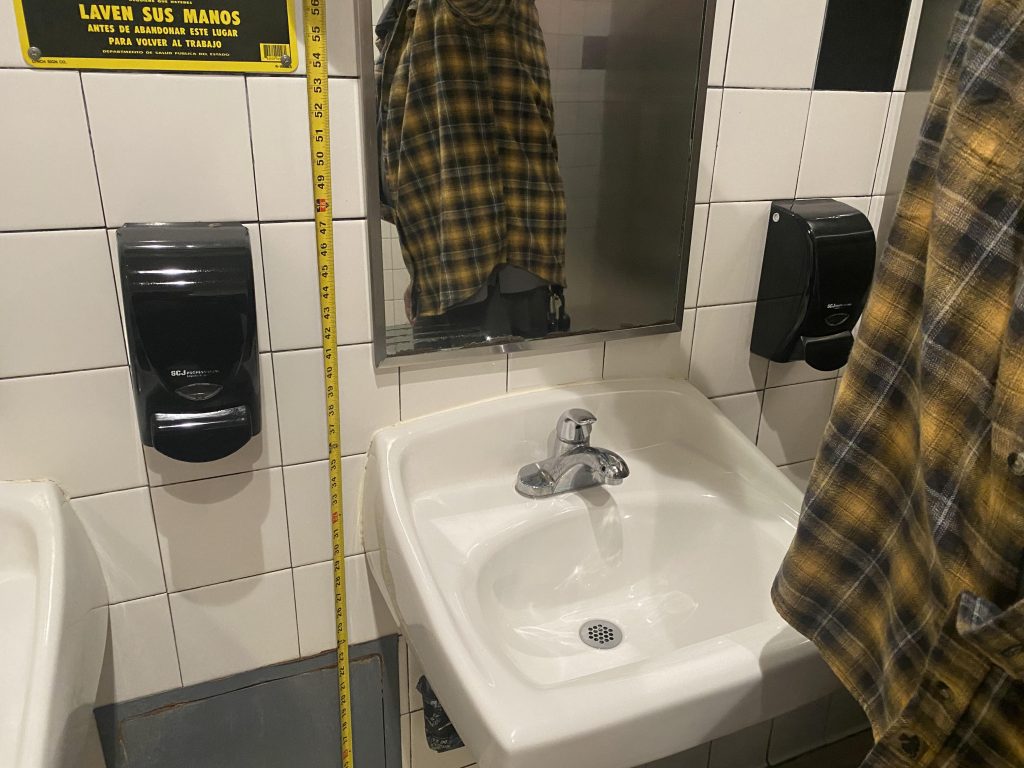
The height requirements for accessible soap dispensers is 15 inches minimum to 48 inches maximum above the finish floor.
ADA Accessible Hand Dryers
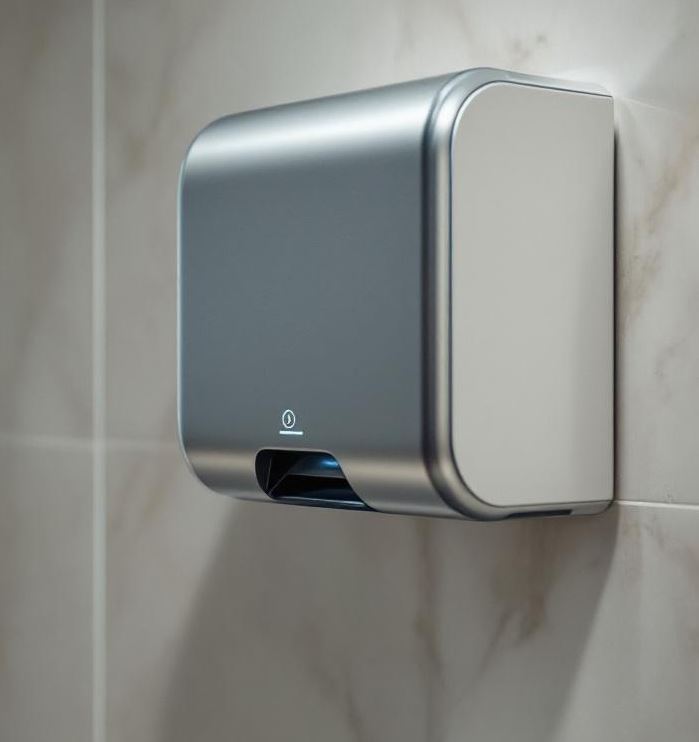
Having accessible hand dryers in your bathroom is important. These requirements follow typical reach ranges. When multiple hand dryers are provided, not all of them need to be accessible.
Height Requirements for ADA Hand Dryers
The reach range requirements for hand dryers require placement to be no higher than 48 inches maximum to operable part above the finish floor. It is important to consider if the dryer is mounted above a counter, there must be proper forward and side reach.
Common ADA Toilet Accessory Violations
When looking at common ADA violations in the bathrooms, there are a few that are extremely common. Watch out for these to avoid lawsuits and fees and make sure you’re accessible to the public!
Clear Floor space
A consideration for ADA toilet accessories is not only the placement and height, but the access to them. Make sure every accessory in your bathroom has a proper 32”x48” minimum clear floor space. Pro Tip: Make sure there are no non-permanent barriers like trash cans or other objects in the bathroom blocking elements.
Dispenser Placement Failures
As mentioned previously, dispenser height usually requires a maximum of 48” high. This is often where most people stop caring. Make sure to remember the reach range of dispensers applies too. If you mount too deep over a counter, you may create some reach issues.
ADA Compliant Mirror Placement
When looking at mirrors, you need to consider where the start of the reflective surface is. ADA requires mirrors to be mounted no higher than 40 inches. Make sure when installing, the border of the mirror is not counted as the mirror, only the surface of reflection itself. Another important part of mirrors is the clear floor space in front of it. If you want more information on ADA accessible toilet accessories like ADA mirrors, check out our guide here.
When to Hire a Certified ADA Consultant
If you’re being sued for accessibility issues with your ADA toilet accessories, or need to be proactive in your building you need an ADA inspection. Our inspectiors will check your property, giveyou a detailed report, and help you understand the barriers to your buildings accessibility. Getting an ADA inspection is not only the right thing to do but it protects you from legal issues and complaints. Feel free to reach out for a free quote!