
ADA Definitions › ADA Title III
ADA Title III: Public Accommodations, Who Must Comply and What It Requires
ADA Title III is the part of the Americans with Disabilities Act that prohibits disability discrimination by private businesses open to the public (places of public accommodation) and sets accessibility rules for commercial facilities [42 U.S.C. §§12181–12189; 28 CFR Part 36]. If you own, lease or run a store, restaurant, hotel, office, clinic, gym or almost any other business that serves customers, Title III applies to you, whatever your size.
Title III is also the title behind nearly every ADA lawsuit filed against a business. This page explains what it covers, what it actually requires of a building and of a business, how it is enforced, and how it works alongside California law. Our inspectors are licensed Certified Access Specialists (CASp), and a Title III facility review is the core of every CASp inspection we do.
Title III at a glance
| Who it covers | Private entities that own, lease, lease to or operate a place of public accommodation; owners of commercial facilities [28 CFR §36.102] |
| Who it does not cover | Religious entities, private clubs, state and local government (that is Title II) [§36.102(e)] |
| Building standard | 2010 ADA Standards for Accessible Design for work permitted on or after March 15, 2012 [§36.406(a)(3)] |
| Existing buildings | Remove barriers where readily achievable [§36.304] |
| Enforced by | Private lawsuits (injunction and attorney’s fees) and the U.S. Department of Justice (civil penalties) [§§36.501–36.505] |
What is Title III of the ADA?
The ADA was signed in 1990 and is organized into five titles. Each title covers a different kind of entity, which is why “is my business covered by the ADA?” really means “which title covers it?”
| Title | Covers | Regulation |
|---|---|---|
| Title I | Employment, for employers with 15 or more employees | 29 CFR Part 1630 (EEOC) |
| Title II | State and local governments: cities, counties, public schools, transit | 28 CFR Part 35 |
| Title III | Public accommodations and commercial facilities run by private entities | 28 CFR Part 36 |
| Title IV | Telecommunications relay services and captioning | 47 CFR (FCC) |
| Title V | Miscellaneous provisions, including retaliation and attorney’s fees | — |
Title III took effect on January 26, 1992. Its core rule: no individual may be discriminated against on the basis of disability in the “full and equal enjoyment” of the goods, services and facilities of a place of public accommodation [28 CFR §36.201(a)].
What is a place of public accommodation?
A place of public accommodation is a facility operated by a private entity whose operations affect commerce and that falls into at least one of 12 categories [28 CFR §36.104]. The list is broad enough to cover almost every business that has customers walking in the door:
| # | Category | Examples from the regulation |
|---|---|---|
| 1 | Lodging | Inns, hotels, motels and similar short-term stays |
| 2 | Food and drink | Restaurants, bars |
| 3 | Exhibition or entertainment | Movie theaters, concert halls, stadiums |
| 4 | Public gathering | Auditoriums, convention centers, lecture halls |
| 5 | Sales or rental | Bakeries, grocery, clothing and hardware stores, shopping centers |
| 6 | Service establishments | Banks, salons, laundromats, gas stations, law and accounting offices, pharmacies, doctors’ and dentists’ offices, hospitals |
| 7 | Public transportation stations | Terminals and depots |
| 8 | Display or collection | Museums, libraries, galleries |
| 9 | Recreation | Parks, zoos, amusement parks |
| 10 | Education | Private schools from nursery through postgraduate |
| 11 | Social service centers | Day care, senior centers, homeless shelters, food banks |
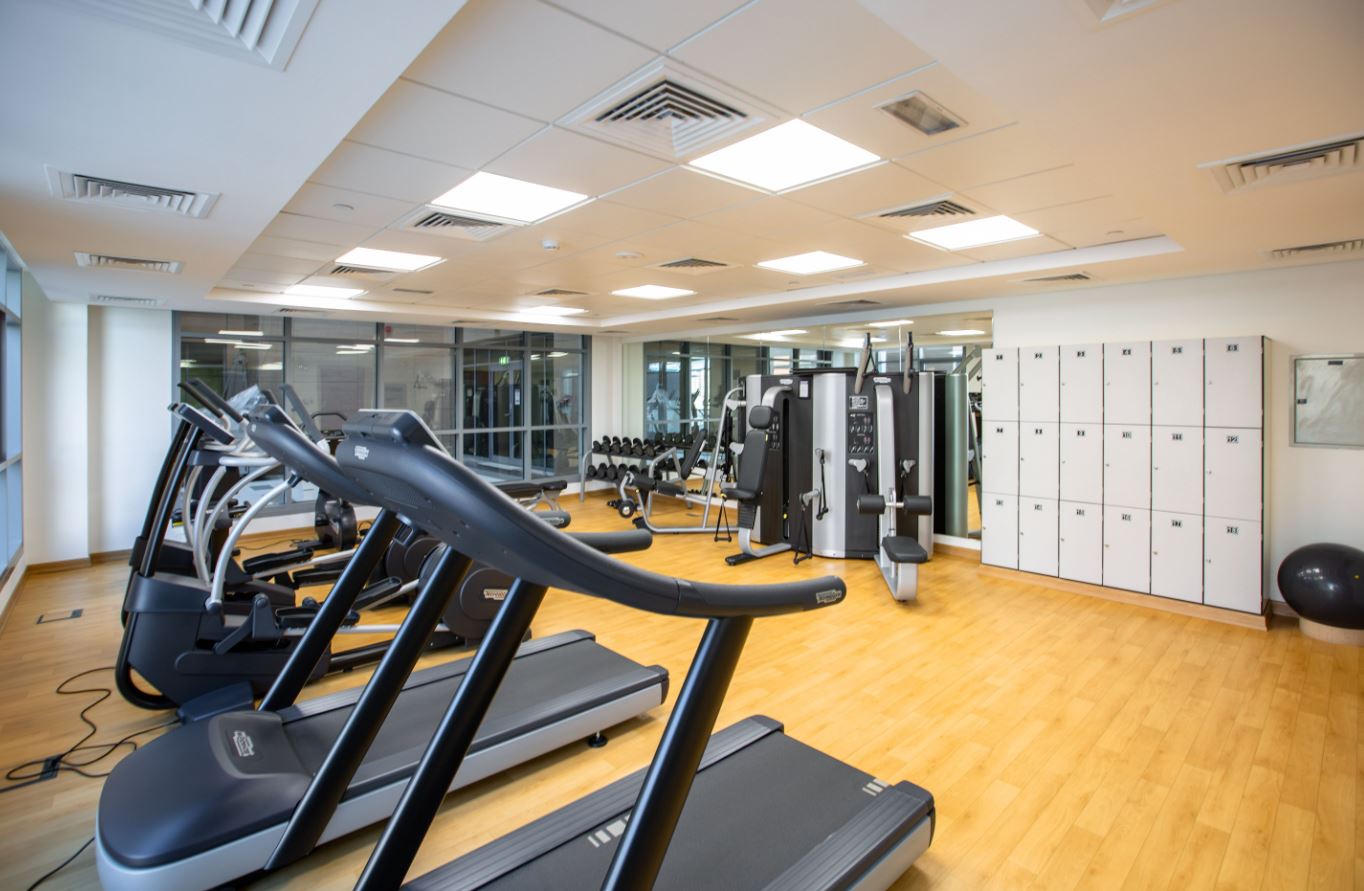
| 12 | Exercise or recreation | Gyms, health spas, bowling alleys, golf courses |
The term “public accommodation” itself means the private entity, not the building: anyone who “owns, leases (or leases to), or operates” a place of public accommodation [§36.104]. That wording is why a landlord, a tenant and a management company can all be named in the same complaint.
Two limits worth knowing
- Small owner-occupied lodging. A place with 5 or fewer rooms for rent that the owner actually lives in is not a “place of lodging” under Title III [§36.104].
- Home-based businesses. When a business runs out of a private home, the part used only as a residence is not covered, but the walkway, entry, hallways and any rooms or restroom clients use are [§36.207].
Commercial facilities
Title III also reaches commercial facilities: nonresidential private buildings whose operations affect commerce, such as offices that do not serve the public, warehouses and factories [§36.104]. These buildings do not have a barrier-removal duty, but new construction and alterations must meet the ADA Standards [§36.102(c)].
Who is exempt from Title III?
Only a few kinds of entities: religious entities (including places of worship), private clubs (unless their facilities are made available to customers of a public accommodation), and public entities, which are covered by Title II instead [§36.102(e)]. There is no small-business exemption. The 15-employee threshold belongs to Title I (employment) and has nothing to do with your parking lot. For the myths around this, see the ADA grandfather clause.
What does Title III require?
Title III asks different things of a building depending on when it was built or changed, and it adds rules for how a business operates. An inspector looks at all four:
1. New construction
Facilities designed and constructed for first occupancy after January 26, 1993 must be fully accessible [§36.401(a)]. The only exception is “structural impracticability,” limited to rare cases where unique terrain prevents accessibility [§36.401(c)]. Buildings under 3 stories or under 3,000 square feet per story do not need an elevator, unless they house a shopping center, a health care provider’s office, or a transit or airport terminal [§36.401(d)].
2. Alterations
Any alteration after January 26, 1992 must make the altered area accessible “to the maximum extent feasible” [§36.402(a)]. An alteration is any change that affects usability: remodeling, renovation, moving walls. Painting, reroofing and mechanical or electrical work are not, unless they affect usability [§36.402(b)]. When you alter a primary function area, the path of travel to it (entrance, route, restrooms, phones, drinking fountains) must also be made accessible, up to 20% of the alteration cost [§36.403(f)].
3. Existing buildings: barrier removal
A public accommodation must remove architectural barriers in existing facilities where it is readily achievable, meaning “easily accomplishable and able to be carried out without much difficulty or expense” [§§36.104, 36.304(a)]. The regulation sets the order: (1) getting in the door, including parking and the entrance; (2) areas where goods and services are provided; (3) restrooms; (4) everything else [§36.304(c)]. Where barrier removal is not readily achievable, you still have to offer the service another way if that is readily achievable, such as curb service or bringing merchandise from an inaccessible shelf [§36.305].
4. Policies, communication and service animals
Title III is not only about concrete. A business must make reasonable modifications to its policies [§36.302(a)], allow service animals (dogs individually trained to do work or tasks) [§§36.104, 36.302(c)], provide auxiliary aids so communication is effective [§36.303], and may not add a surcharge to cover any of it [§36.301(c)].
Which standard applies: 1991 or 2010?
The building standard depends on the date the last permit application was certified complete (or, with no permit, the date work started) [§36.406(a)]:
| Permit / start date | Standard that applies |
|---|---|
| Before September 15, 2010 | 1991 Standards |
| September 15, 2010 to March 14, 2012 | Either the 1991 or the 2010 Standards |
| On or after March 15, 2012 | 2010 Standards |
Elements that complied with the 1991 Standards and have not been altered since March 15, 2012 do not have to be upgraded to the 2010 numbers; this is the element-by-element safe harbor [§36.304(d)(2)(i)].
Landlord and tenant: who is responsible under Title III?
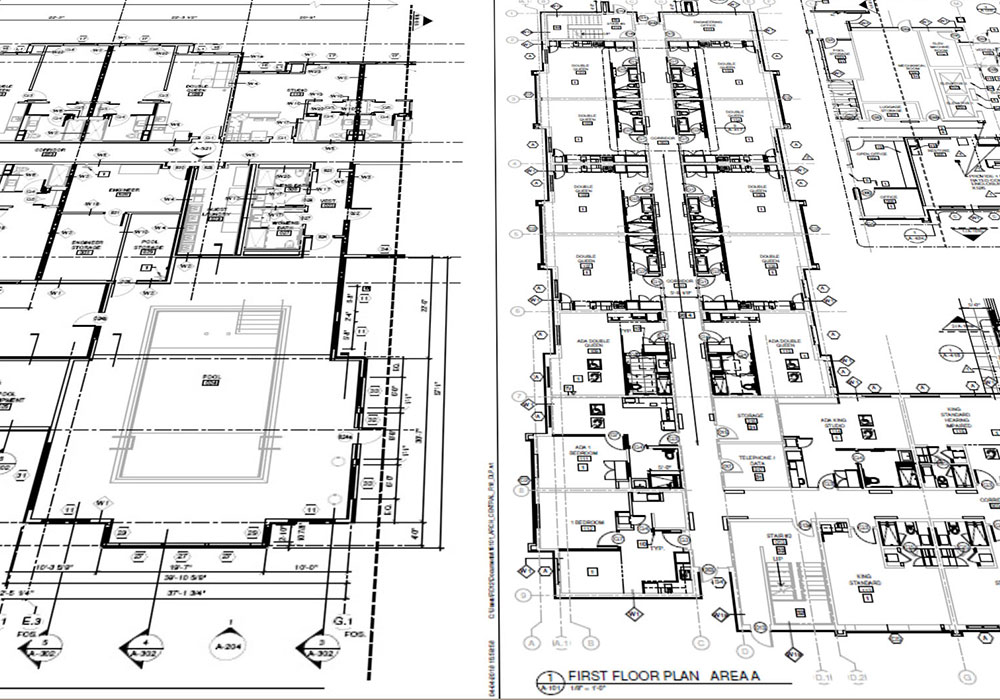
Both. The landlord who owns the building and the tenant who operates the business are each a public accommodation subject to Title III [§36.201(b)]. A lease may divide who pays for what, but that split only works between the two of you; it does not take either party out of a lawsuit. Our guide to ADA compliance responsibility covers how to write that into a lease.
How Title III is enforced
Private lawsuits
Anyone who faces disability discrimination can sue for an injunction, an order to fix the barriers [§36.501]. The court may award the prevailing party reasonable attorney’s fees and costs [§36.505]. Federal Title III does not give private plaintiffs money damages, but the fee award alone keeps filing volume high nationwide.
The Department of Justice
The Attorney General can sue where there is a pattern or practice of discrimination or an issue of general public importance [§36.503]. In those cases a court can award damages to the people harmed and civil penalties. For penalties assessed after July 3, 2025, the maximum is $118,225 for a first violation and $236,451 for a subsequent one [§36.504(a)(3); 28 CFR §85.5]. Courts must consider an entity’s good-faith efforts to comply when setting a penalty [§36.504(d)].
Websites
The Department of Justice’s position is that Title III covers the goods and services a business offers online, but there is no Title III regulation with a technical web standard; businesses have flexibility in how they comply (DOJ, Guidance on Web Accessibility and the ADA, March 18, 2022). The detailed WCAG 2.1 AA rule adopted in 2024 applies to state and local governments under Title II. See our ADA compliant website guide.
Title III in California
California makes Title III far more expensive to ignore. Under the Unruh Civil Rights Act, any ADA violation is also a state civil rights violation [Civ. Code §51(f)], and the plaintiff can recover statutory damages of at least $4,000 per occasion plus attorney’s fees [§52(a)]. California buildings must also meet Chapter 11B of the California Building Code, which is stricter than the ADA Standards in many places (48″ ramps instead of 36″, 108″-wide accessible parking stalls instead of 96″, all public entrances accessible instead of 60%).
A CASp inspection changes the math. A business that was CASp-inspected before it was served is a “qualified defendant” [Civ. Code §55.52(a)(8)] and can ask for a 90-day stay and an early evaluation conference [§55.54]. If violations are corrected within 60 days of service, minimum statutory damages drop to $1,000 per offense [§55.56(g)(1)], and a business with 50 or fewer employees owes no minimum statutory damages for 120 days after a CASp inspection if it fixes what the report found [§55.56(g)(3)].
Common Title III violations inspectors find
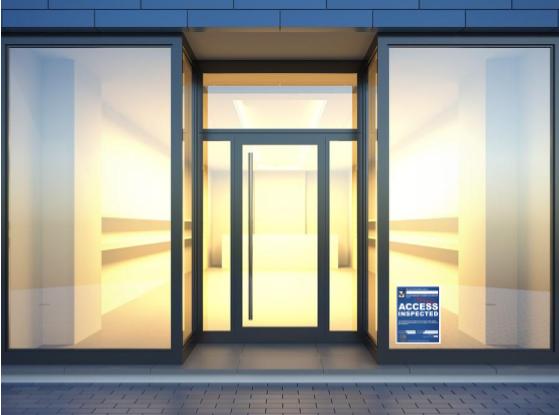
Most Title III claims come from the first priority area, getting in the door: parking slopes over 1:48 or a missing van space [§§502.4, 208.2.4], a lip over ½” at the entrance [§303.4], heavy or knob-handled doors [§§404.2.7, 404.2.9], counters over 36″ [§904.4] and restrooms without a 60″ turning space [§304.3]. See the top 10 ADA violations and our ADA compliance checklist.
Know where your business stands under Title III
A CASp inspection measures every element against the ADA Standards (and Chapter 11B in California), gives you a prioritized barrier-removal plan, and documents your good-faith effort to comply. Call or text (949) 339-9429 for a free estimate. We inspect nationwide.
Frequently asked questions
What is Title III of the ADA in simple terms?
It is the part of the ADA that says private businesses open to the public must not discriminate against people with disabilities. In practice that means accessible buildings (parking, entrances, routes, restrooms, counters), reasonable changes to policies, service-animal access and effective communication.
Does ADA Title III apply to small businesses?
Yes. Title III has no minimum size. The size of a business only matters when deciding what barrier removal is “readily achievable” in an existing building, which weighs the cost against your resources [§36.104]. Small businesses may also qualify for federal tax incentives for barrier removal.
What is the difference between ADA Title II and Title III?
Title II covers state and local governments (cities, counties, public schools and universities, transit agencies) under 28 CFR Part 35. Title III covers private businesses under 28 CFR Part 36. A city hall falls under Title II; the coffee shop across the street falls under Title III.
Can you get money damages under Title III?
Not in a private federal suit. A private plaintiff can get an injunction and attorney’s fees [§§36.501, 36.505]. Money comes from state laws such as California’s Unruh Act ($4,000 minimum per occasion) or from Department of Justice cases, where courts can award damages and civil penalties [§36.504].
Sources: Americans with Disabilities Act Title III, 42 U.S.C. §§12181–12189; 28 CFR Part 36 (§§36.102, 36.104, 36.201, 36.207, 36.301–36.305, 36.401–36.406, 36.501–36.505); 28 CFR §85.5; 2010 ADA Standards for Accessible Design; U.S. Department of Justice, Guidance on Web Accessibility and the ADA (2022); 2025 California Building Code Chapter 11B; California Civil Code §§51, 52, 55.52–55.56. Written for property owners and managers, not as legal advice.