
ADA Wheelchair Width Guide: Doors, Hallways & More
People with disabilities users across the United States face daily barriers related to accessibility, especially dealing with ADA wheelchair width requirements. If you are a business owner or property manager, you’re federally required by the Americans with Disabilities Act (ADA) to provide compliant ADA wheelchair widths. This includes doorways, hallways, passing space, and accessible routes. If you need help with ADA compliance or need to schedule an evaluation, reach out today!
What Wheelchair Width is Required on Accessible Routes
The required wheelchair width for an accessible route is 36” inches with an exception of 32” inches for a maximum distance of 24” inches [§403.5]. A good example of when a reduction of width is needed are areas like supermarket aisles with occasional displays placed on the accessible route, decreasing width.
Wheelchair Width Requirements at Doorways
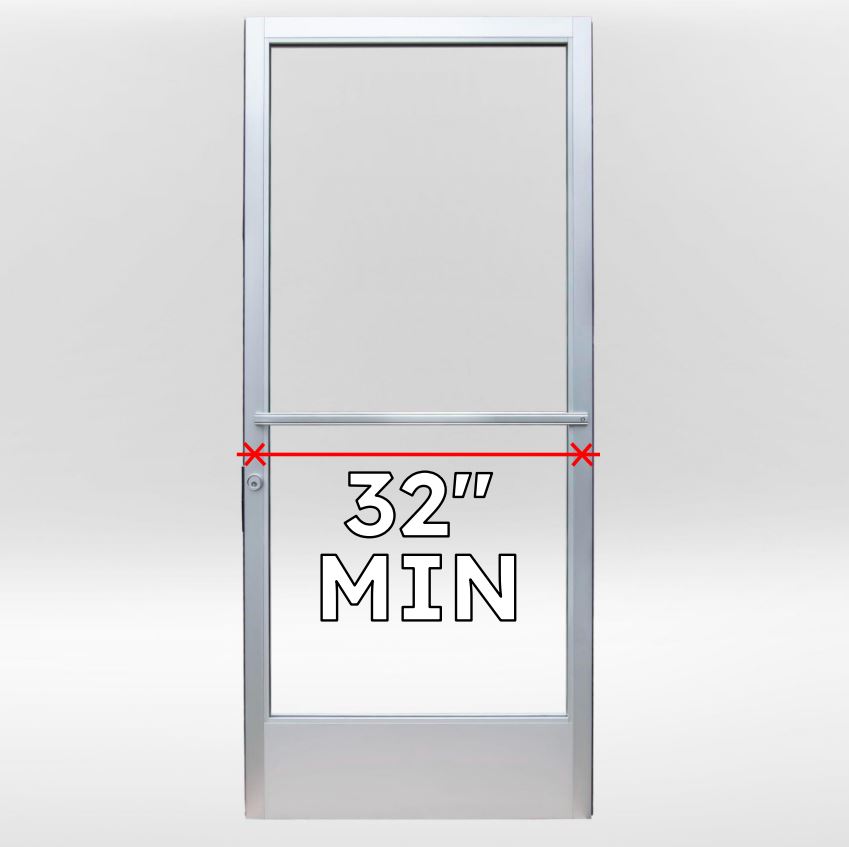
The correct dimensions for wheelchair width at doors is 32” inches measured from the stop to the face of the door [§404.2.3]. The most important and overlooked wheelchair width requirement is often the door width because it’s dependent on the door purchased for the project. As a builder, planning is the most important step when choosing the correct doors for your project. The wheelchair width requirements at doors are in place to ensure enough space for wheelchair users to easily use the area. Don’t forget to read our ADA door guide too!
Wheelchair Width Requirements in Hallways
Wheelchair width requirements for hallways call for 36” inches minimum of continuous width [§403.5]. A hallway must comply with the ADA when it is part of an accessible route.
Required Wheelchair Width in Aisles
Aisles in stores or other public places have a wheelchair width requirement of 36” inches minimum [§403.5]. Just like hallways, aisles are considered a part of an accessible route and must comply with the Americans with Disabilities Act (ADA).
ADA Wheelchair Turning Space
Wheelchair turning space width must be 42” inches minimum when the distance to the wall at the 180° turn is at least 48” inches. If 42” inches of width is not possible, code permits a 36” inch wide wheelchair turning space so long as the distance from the wall at the 180° turn is increased to 60” inches minimum [§403.5.2].
Wheelchair Passing Space on an Accessible Route
The width requirements of passing space on an accessible route requires a 60″ inches by 60″ inches minimum space every 200 ft OR a t-shaped space with each stem 48” inches long [§403.5.3]. The purpose of passing space creates an area for wheelchair users to pass by another wheelchair user without risk or collision or barriers. Every hallway, accessible route, aisle, and all related paths must comply. Understanding how to get ADA compliant can be difficult, so don’t hesitate to reach out for an ADA consultation.
ADA Compliant Wheelchair Width for Ramps
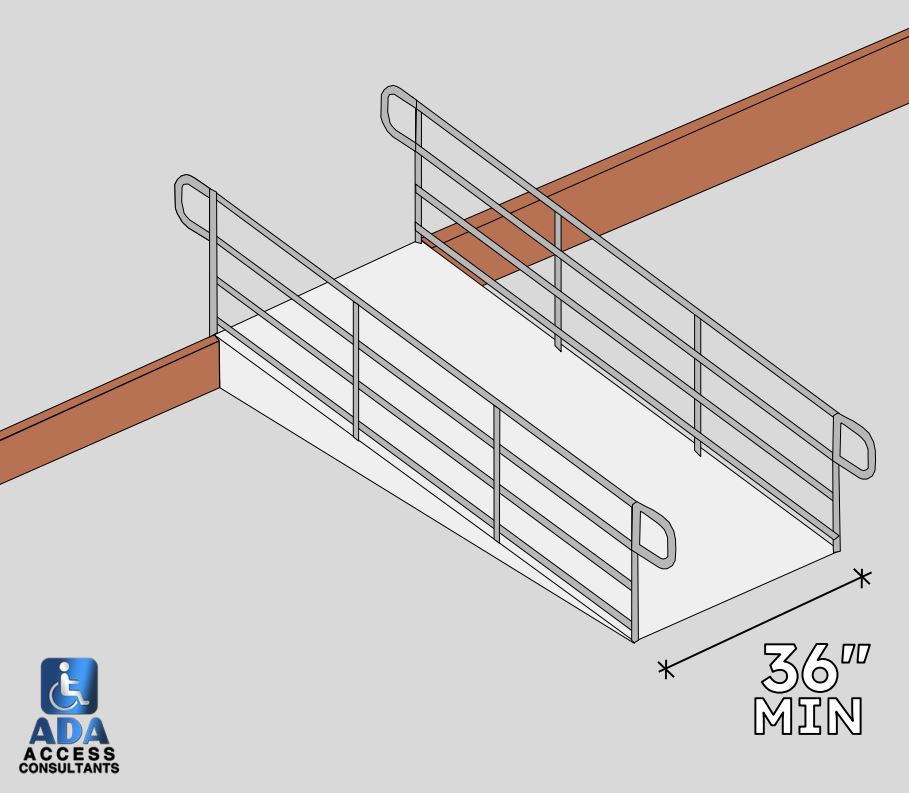
The ADA requires ramps to be 36” inches in width minimum between the inner-most edge of the handrails [§405]. The ADA wheelchair width of ramps is a highly studied topic and the width has been determined to be acceptable for people using wheelchairs or other mobility devices.
What is the Minimum Width for Wheelchairs?
ADA wheelchair width is important because it concerns your business and customers. As a business owner or property manager, it’s important to serve the most amount of customers and having an ADA Compliant property allows for that. ADA wheelchair width code is federal law, so people providing public services are required to follow it. A big problem in the United States is the increase of ADA related lawsuits that can damage a businesses reputation and finances. Business owners are being sued so make sure to evaluate your property and find out what needs Improvement to avoid fees and settlements.
Why is ADA Wheelchair Width Important?
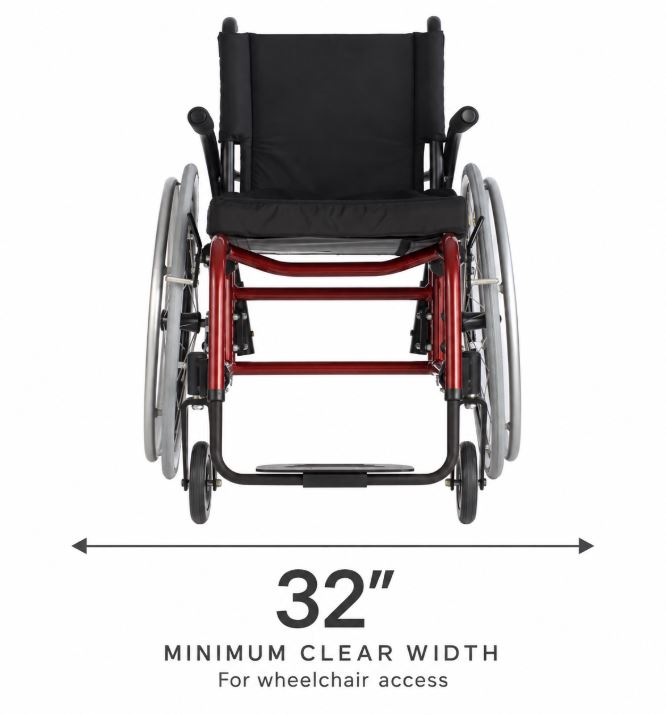
In most cases the minimum clear width for wheelchairs is 32” inches. These ADA wheelchair width requirements include doorway or gate width, accessible route width, and clear floor space requirements. If you are interested in getting an ADA complaint and want to provide the correct ADA wheelchair width at your property, call today.
Things to Consider When Resizing a Doorway
Although we mainly covered ADA wheelchair width on this page, it’s important to follow all door requirements when modifying a property. Make sure you include a proper wheelchair door width of 32” inches minimum. Additionally ensure you follow proper closing speed and closing force requirements found on our ADA door requirements guide.
Common Questions
Wheelchair Width FAQ
How wide is a wheelchair typically?
The average wheelchair is 24” inches to 27” inches so the ADA requires a minimum of 32” inches of width when considering wheelchairs.
What is the correct ADA door width for a wheelchair?
The correct ADA door width for wheelchairs is 32” inches minimum.
How wide is a wheelchair ramp?
An ADA compliant ramp must be 36” inches minimum to accommodate wheelchair users.
What is the standard hallway width for wheelchair users?
The standard hallway width for wheelchair users is 36” inches minimum.
How wide must an accessible route be to accommodate a wheelchair user?
Accessible routes call for a minimum wheelchair width of 36” inches.