Toilet Paper Holder Requirements
Toilet paper holder requirements are pivotal to ADA compliance. In commercial restrooms where the public has access, it is just as important to have correct toilet paper holder heights as it is to have things like accessible ADA ramps in order to provide access to everybody and protect your business from violations, lawsuits and fines. This guide is for contractors, property owners, inspectors, business owners, and anyone who is in charge of a commercial or public restroom. By using this article you can educate yourself on the ADA toilet paper holder heights, placements, and more.
What Do Toilet Paper Holder Requirements Include?
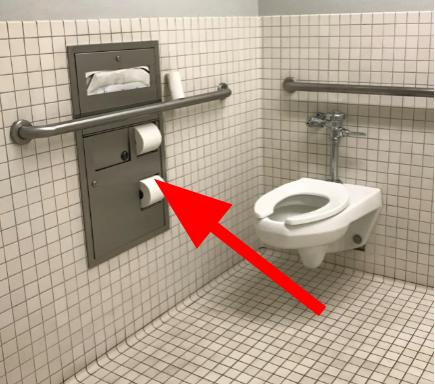
The Americans with Disabilities Act Standard §604.7 outlines toilet paper holder requirements and explains how to be compliant with toilet paper dispenser heights, positions, and distances from the toilet. An important highlight of the ADA standard is the requirement that dispensers must be usable from a seated position. Additionally, when installing toilet paper dispensers, you must consider proper reach ranges and make sure your dispenser is free from obstructions like grab bars.
Toilet Paper Holder Height Requirements & Placement
Toilet Paper Holder Height Requirements:
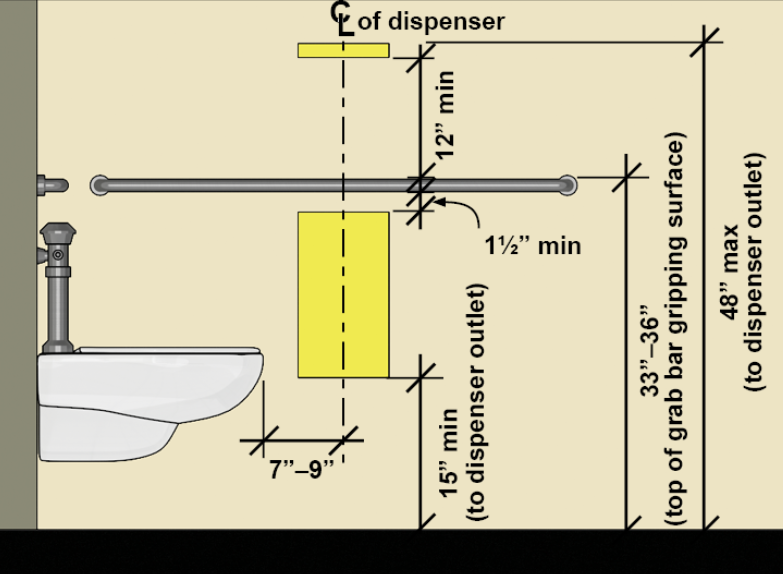
The height of toilet paper dispenser outlets must be 15 inches minimum above finish floor and 48 inches maximum height above finish floor.
These requirements apply to both recessed and non-recessed toilet paper dispensers. Reach range plays a large role in these laws and need to be considered when fixing a non-compliant bathroom.
Toilet Paper Dispenser Distance From Toilet
The toilet paper dispenser outlet center line must extend to be 7”-9” in front of the end of the toilet.
This applies to both recessed and non recessed toilet paper dispensers. This is the most common installation error so make sure to hire a professional ADA inspector, so you will know what is out of compliance, and how to reach compliance.
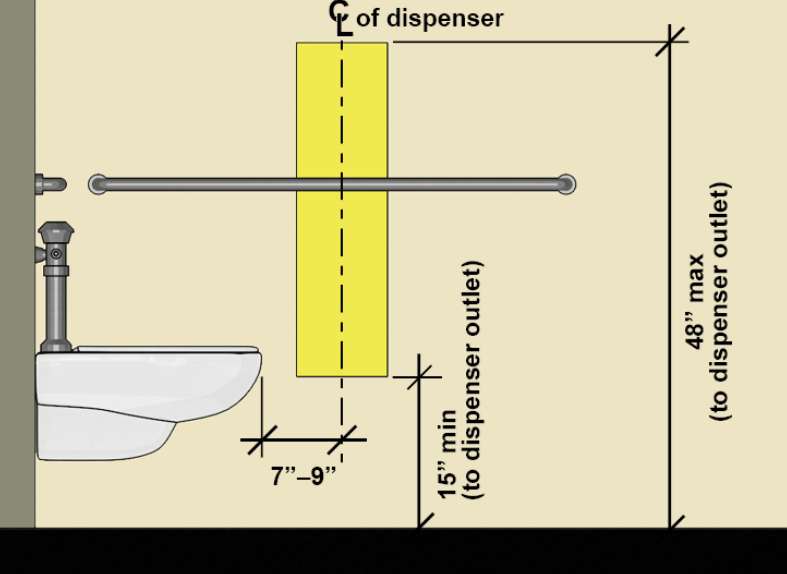
Recessed VS Non-Recessed Toilet Paper Holder Requirements
Understanding the differences between recessed and non-recessed toilet paper dispensers is important because it determines how you install or build your bathroom. Recessed toilet paper dispensers are implanted into the wall or wall surface and provide more clearance around the toilet. From our inspectors recommendation, it is easier to comply with toilet paper holder requirements when using recessed dispensers.
On the other hand, non-recessed toilet paper dispensers protrude from the wall and make it slightly more difficult to reach ADA spacing and clearance rules. Either are ok so long as the proper ADA requirements are followed. But don’t worry, toilet paper holder requirements have never been easier with this guide!
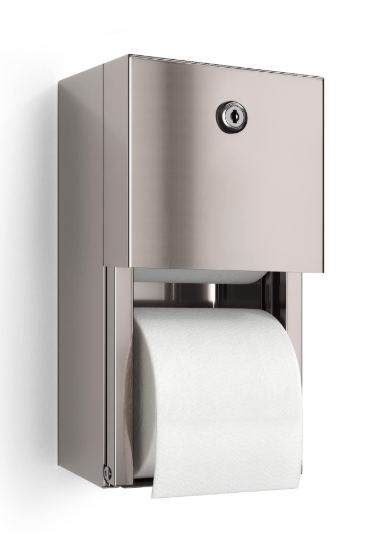
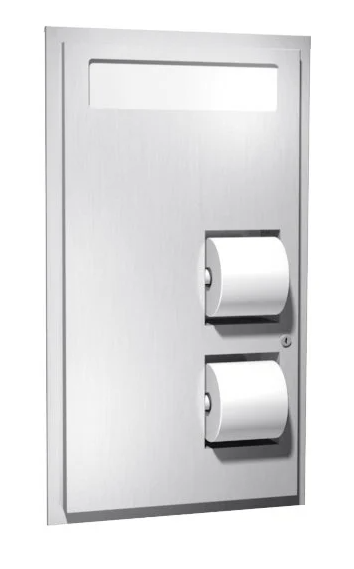
Grab Bar Clearance Around Toilet Paper Dispensers
Toilet paper dispenser requirements say outlets can be positioned underneath or above grab bars but never behind them. When the outlet is behind the grab bar, access to the toilet paper roll for individuals with disabilities is difficult and can cause unnecessary strain or even be impossible for some to access. In order to provide access to all, it is your responsibility as a business owner to correct these ADA violations and provide the necessary access.
Toilet paper holder requirements are important to consider when installing toilet paper dispensers. The toilet paper dispenser outlet may be a maximum of 12” above the grab bars. Grab bars must be positioned 33”-36” above finish floor which affects placement of dispenser.
Additionally, when dispensers are installed below grab bars the maximum distance from the outlet to the bottom of the grab bar must be 1 ½” or more. In order to maintain compliance, it is important to plan the installation accordingly. Check out our guide on ADA grab bars here.
Most Overlooked Toilet Paper Holder Requirements:
- The toilet paper dispenser outlet is too far forward or close to the toilet.
- The outlet height exceeds 48 inches.
- Non-recessed dispensers are too close to grab bars.
- Some dispensers don’t control the paper delivery well.
Toilet Paper Holder Requirements: Continuous Flow
ADA requirements say continuous flow of toilet paper is required for easy delivery of toilet paper. This just requires there is no restriction and toilet paper and all individuals can easily use the dispenser.
Who is Liable for ADA Toilet Paper Holder Requirements
Almost all types of businesses that offer public restrooms are subject to ADA bathroom requirements. Property owners, contractors, property managers, and businesses need to ensure they are compliant with ADA toilet paper holder requirements. Following this guide can be the difference between providing fair access to all people, and drowning in fines and legal fees. Our professional team of inspectors evaluates your property for ADA compliance and tells you exactly what needs to be done to be compliant and avoid lawsuits and fines.
Frequently Asked Toilet Paper Holder Requirement Questions:
Q: What is the correct height for a toilet paper holder?
A: 15” Minimum to 48” maximum to the dispenser outlet
Q: How far must a toilet paper holder be from the toilet?
A: 7”-9” from the centerline of the toilet.
Q: Can toilet paper dispensers be behind garb bars?
A: No, they must be accessible and easily accessible for all, which the grab bar prevents.
Q: Are recessed toilet paper dispensers required by the ADA?
A: No. However, they can usually make access and compliance easier.
Q: What type of toilet paper holder is not ADA compliant?
A: Any toilet paper holder that restricts flow or does not comply with the ADA standards of 604.7 are not compliant.